Belle
A safe place to land
Dogs, Dog training, Rehabilitate, Rehome, Fostering
How a fostering volunteer has changed his life
Over the past couple of years, we’ve been expanding our foster program and are now including dogs with some common behaviour issues. Our dedicated fostering manager and behaviour team fully support the fosterer and there are lots of careful introductions and training in the process.
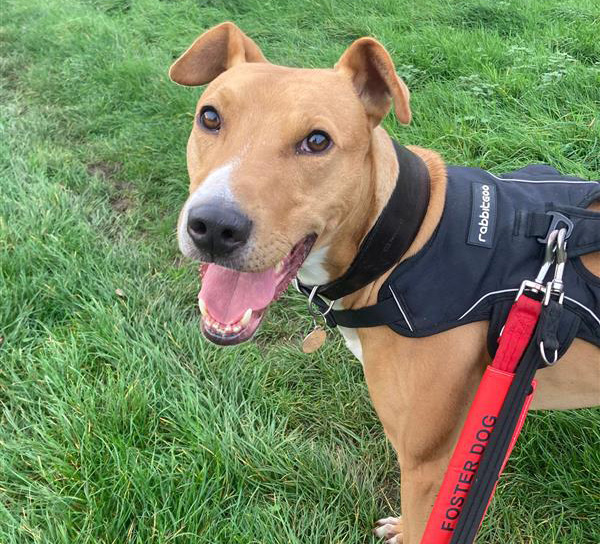
Roman here may look like a big strong boy but it has been his anxiety that has been difficult to manage in kennels. But with just a month on foster with Angela, there is such a clear path of successes and learnings that he has taken, that we are confident he would prosper being adopted.
• He can be left overnight and for a few hours, after Angela found that he just needs a clear predictable lead up to being alone. Sometimes he picks up a wellie to his bed for comfort at bedtime.
• He no longer follows her around like a nervous shadow but does prefer to settle in the same room.
• He is not fazed by household noises, or even fireworks.
• Is learning ‘run’ command as well as walk and wait – she’s discovered that his walking skills improve if a run on lead is part of the walk.
• He enjoys car travel.
• That sometimes he may take a few minutes to come say hello when she comes home, but she will soon be greeted with a big grin and kisses.
• If he is feeling anxious, he likes a 'long companionable side hug for reassurance'.
• And that sometimes he tries to be a lap dog, all 29kg of him!
A foster home can discover these behaviours that are difficult to see in kennels, and Angela’s notes and observations are going to be key to help Roman settle with his new family, when we find them.
We are looking for dog foster homes, where there are no children or other dogs » Go to our volunteer listings
Dogs, Dog training, Rehabilitate, Rehome, Fostering

Dogs, Dog behaviour, Rehome, Fostering
Dogs, Rescue, Rehabilitate, Rehome