New cat
Preparing for a new cat
Cats, Adopters, Kitten
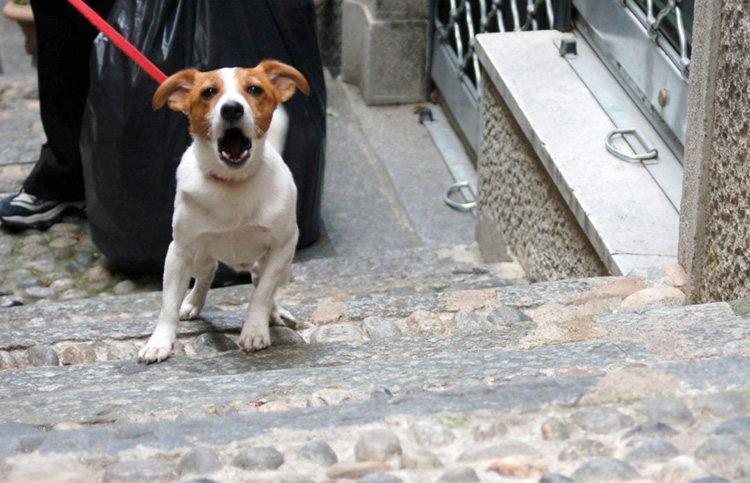
Walking a reactive dog is stressful, embarrassing even. But you’re not alone, and it genuinely does get better.
Be consistent, but also don't berate yourself if you didn't quite get through it as smoothly as you wanted – both you and your dog are learning with this one!
You need to gain your dog’s attention before they have started to react – after that, you’re playing catch up. You may have to get silly to make yourself more interesting than whatever you are avoiding. Try being very animated and speaking excitedly, walk in zigzags, offer a toy or ask them to perform commands for a treat.
Get silly. Make yourself more interesting than whatever you're trying to avoid.
Randomise how you get their attention, and practise it at calm moments too - otherwise they'll learn that 'silly owner' means something scary is coming!
Walk past the squirrel/person/traffic calmly and confidently, giving your dog as much space as possible. Praise your dog if they are behaving well but ignore them if they are barking, growling or jumping. Keep the lead at a steady tension as you walk on past. Don’t drag but be persistent – it is about helping them make the correct decision to move on. Praise your dog the moment they start to come with you willingly – timing is everything!
If your dog reacts – and sometimes you just can’t get enough space or someone suddenly appears – ignore the barking and lunging and take your dog away as quickly and calmly as possible.
.jpg)
Having a good kit just makes everything a bit more comfortable - and safe.
We always recommend a harness for any dog, but for dogs that pull or may lunge with the lead attached to their collar - they risk damage to the delicate throat area and twisting along the spine. Find a harness that is well-fitted so they cannot escape however much they twist about.
Experts tip:
Brands Xtra Dog or Perfect Fit have an extra front clip, which gives you extra control if you have a strong dog.
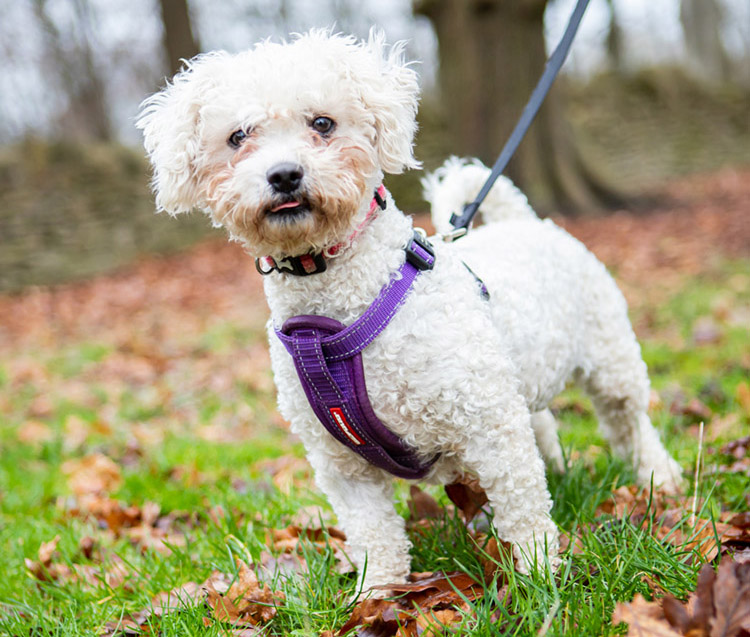
Ask at a pet shop for a quiet time to fit a harness - they will understand completely.
Never use a choke chain collar, half check, prong or pinch collar. All of these cause pain and damage to your dog's neck. Many are now illegal.
For some freedom on the lead, try a ‘long line’ which you loop in and out of your hand. It gives you more control and is easier to grip than an extendable lead, which can be jarring and easily dropped.
Consider a muzzle. These no longer have the stigma they used to and can come in lovely colours. When it comes to reactivity, they give a feeling of safety which just takes the edge off your own stress which immediately is reflected in your dog’s behaviour for the better.
Muzzles have lost their stigma — and a calmer owner means a calmer dog.
Start with a vet check to rule out pain as a cause. Your vet may refer you to a behaviourist directly, or can provide a referral for someone you've found yourself. We recommend looking for a behaviourist accredited through one of these associations — both assess for high standards and experience:
Association of Pet Behaviour Counsellors (APBC) apbc.org.uk
Animal Behaviour and Training Council (ABTC) abtc.org.uk
» DOWNLOAD this as a printable page
Read more – you got this!

Preparing for a new cat
Cats, Adopters, Kitten
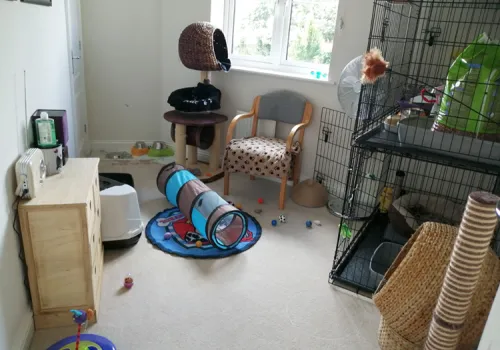
How to choose and set up a secure room for newly-adopted or nervous cats
Cats, Adopters, Kitten

Letting your cat outside for the very first time is nerve-wracking! Here are some tips on how to prepare your cat for their next adventure
Cats, Adopters, Cat behaviour