New cat
Preparing for a new cat
Cats, Adopters, Kitten
» Read our introduction article, What is reactivity?
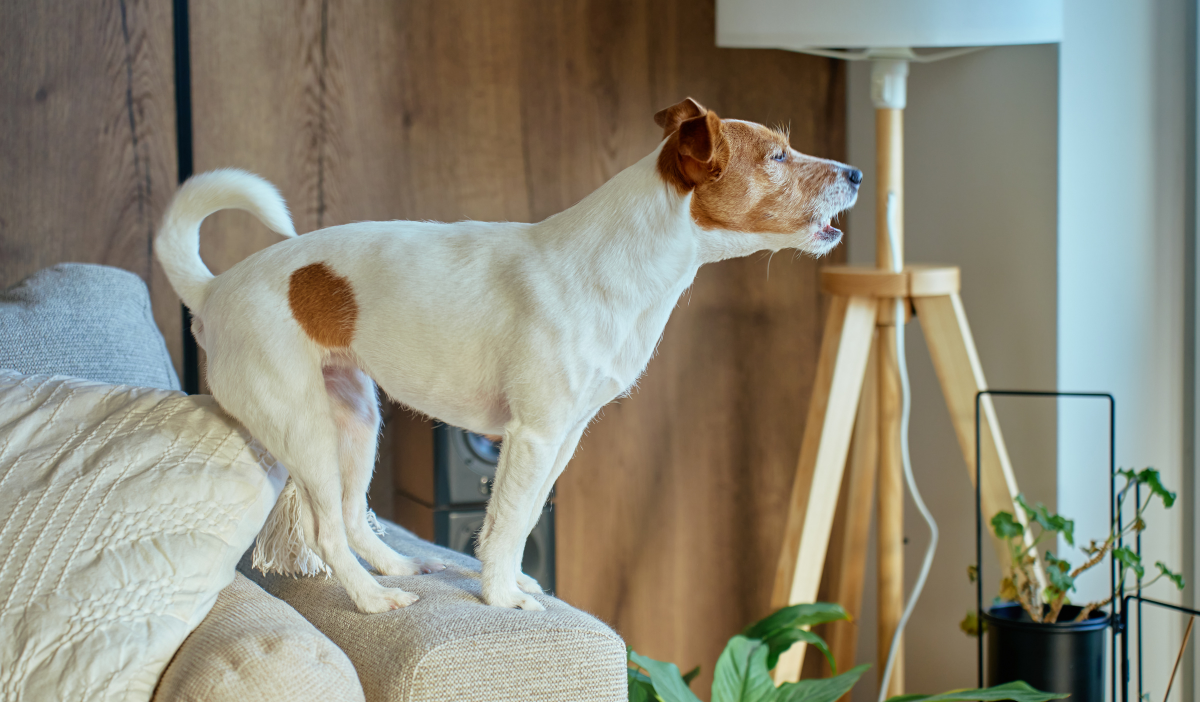
The good news is, inside your home you have a lot more control of the environment and you can set your dog up to succeed. Wherever your dog is showing reactivity, use these 5 elements to bring your dog’s anxiety down and a bit of calm back!
First off, stop them practicing the behaviour as it can be self-rewarding. A bit like picking at a splinter. This might mean blocking off an area or changing the layout somehow.
Stop them practising the behaviour — a bit like picking at a splinter, it can become self-rewarding.
Adaptil is a manufactured hormone which promotes a feeling of calm in dogs. It doesn’t smell at all to humans, you just plug it into your wall or there are sprays available for their bedding or key areas of your house.
In extreme cases, speak to your vet about medication. It is not a long-term option, but it can help your dog focus as you start your training with them.
A kong stuffed with their favourite treats, a lickimat, a chew – food is one of your best tools here to redirect their attention. You can also play focus games for those who prefer praise and toys as a reward.
» Read more about Focus and attention games
Never punish or shout at your dog. Stay calm, reward the good behaviour and ignore the bad. Perhaps buy your neighbours a box of chocolates and explain that you are working on it...!
Changing a behaviour is never a straight line, so keep going and keep your new rules the same. You will get a stage known as an ‘extinction burst’, where it gets much worse just after you thought it was getting better. It’s your dog testing everything. You do it too – you know when the batteries are low in a remote control, but you keep jabbing at the buttons and shaking the remote anyway? Extinction burst.
You'll hit a point called an 'extinction burst' — where things get worse just when you thought they were getting better. It's your dog testing the new rules. Keep going.
Once you've got those foundations in place, here's how to tackle some of the most common flashpoints.
Block the view, but keep the light, with a frosted film for the lower half of windows – and move furniture so your dog cannot climb for a higher view.
In louder times of the day, such as commuting times or pub kick out, occupy your dog with enrichment such as a stuffed kong or long-lasting chew. A radio playing at a low-level can help mask noises.
This is called ‘barrier frustration’ and you’ll see your dog run along a fence, or perhaps run to the end and bounce off at the end of the garden. Add a physical barrier, such as planters, to prevent a straight path up and down.
Stop them rehearsing the behaviour by taking them out on a lead and train for their attention at quiet times, and build up slowly. Reward well when they are focused on you.
» Read more about Focus and attention games
When you do use these items, move your dog to a different room with some enrichment and use child gates to keep them out.
For training, take it in stages slowly. Move onto the next stage only when your dog is comfortable and calm. Reward when they are calm, ignore the bad and stop the training until they are calm again.
• Vacuum cleaner is in the same room, off and not moving.
• Move it around whilst it is still off.
• Turn the sound on with they are in a different room
• Turn the sound on in the same room.
• Do a short burst of hoovering, away from them.
• Increase the length of time the cleaner is on gradually.
Start with a vet check – this is to rule out if pain is causing a reaction. Your vet may be able to refer you to a behaviourist directly or can provide a referral for someone of your choice. We recommend looking through these associations, as they are assessed to have a high level of standards and experience.
Association of Pet Behaviour Counsellors (APBC)
Animal Behaviour and Training Council (ABTC)
» DOWNLOAD this as a printable page
Preparing for a new cat
Cats, Adopters, Kitten
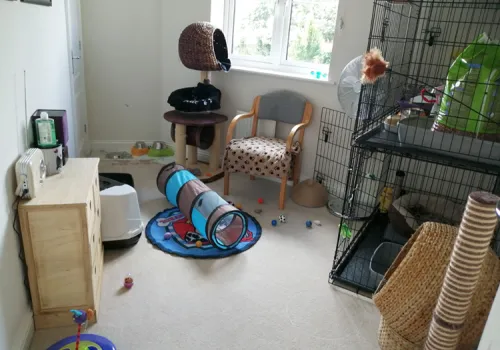
How to choose and set up a secure room for newly-adopted or nervous cats
Cats, Adopters, Kitten
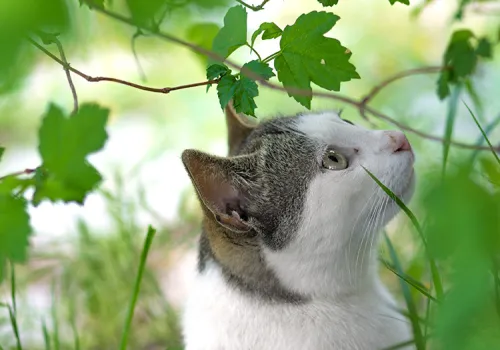
Letting your cat outside for the very first time is nerve-wracking! Here are some tips on how to prepare your cat for their next adventure
Cats, Adopters, Cat behaviour